Learner support is already happening every day in your RTO – staff checking in with learners, trainers answering questions, and student services helping people navigate challenges. The problem isn't whether support is happening; it's whether it's being recorded clearly enough to stand up as evidence.
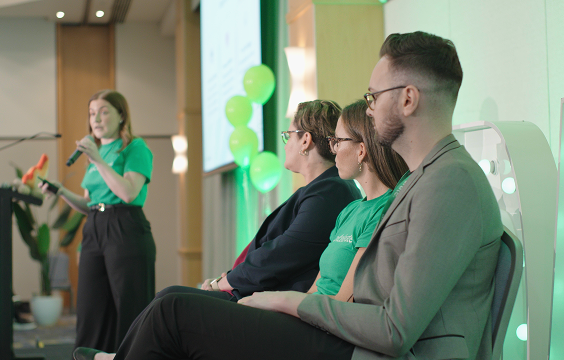
Both Lauren Boon-Hollows and Michelle Fitton highlighted this gap during the recent VET QI webinar (Quality Lessons for RTOs: Reflections on 6 Months of the 2025 Standards), featuring aXcelerate. Support is happening, but evidence is often incomplete or scattered.
“Support that isn’t recorded is invisible in an audit.”
– Michelle Fitton, General Manager at Blueprint Career Development
Support must be visible to be evidenced – and evidence is what counts in an audit.
Since the 2025 Standards for RTOs took full effect, ASQA has sent a clear message to providers: student support can no longer sit quietly in the background. It must be visible, practical and built into the everyday learner experience.
If it is delivered but not documented, it becomes much harder to demonstrate how learner needs were identified, what action was taken, whether follow-up occurred, and how those insights informed improvement.
Good support is not the same as visible support
In practice, learner support can be spread across inboxes, post-it notes, spreadsheets, informal conversations, trainer knowledge, shared drives and disconnected documents. One staff member knows the background. Another has the latest email. Someone else remembers the phone call. The learner may have submitted a help request somewhere else entirely.
From a service perspective, support may be happening and be effective. But from a compliance and operational perspective, the evidence may as well not exist.
That creates both compliance risk and operational blind spots.
Learner support becomes difficult to evidence when:
- information is stored across multiple systems
- records are inconsistent or incomplete
- follow-ups are not clearly documented
- evidence relies on staff memory
If evidence is difficult to retrieve or inconsistent in format, it becomes much harder to demonstrate a complete and credible learner support story.
During an audit, the question isn’t just whether support occurred – it’s whether your organisation can clearly show the link between learner need, support action, follow-up and outcome.
Why the 2025 Standards change the conversation
Under the 2025 Standards, the expectation isn’t just that RTOs respond when learners need help but that those responses form part of a broader, evidence-based approach to learner support and continuous improvement.
Administrators now have a strategic responsibility to ensure support is:
- accessible
- reportable
- consistent
- connected to improvement
Operational challenges for RTO admins
RTO admins often sit at the centre of this challenge because they are responsible for making the processes practical, consistent and audit-ready across teams. They are the ones asking questions like:
- Are learners' needs being identified early enough?
- Are support interactions being recorded in the same place?
- Can other staff easily see previous issues or actions taken?
- Are follow-ups being assigned and completed?
- Can we report on common support themes or emerging risks?
If the answer to those questions is unclear, learner support may still be happening – but your organisation may not be in a strong position to prove it.
What this looks like in practice
In the webinar, Michelle Fitton, General Manager at Blueprint Career Development, shared how their team addressed this exact challenge as they scaled.
As Blueprint grew from a small RTO into an organisation supporting over 5,000 students annually, learner support and staff activity were happening consistently – but not always recorded in a way that could be easily evidenced.
Rather than adding more processes, they focused on creating a structured way to capture what was already happening.
“Our staff have always given really good support. What we hadn’t done… was record that spectacularly well.” – Michelle Fitton, Blueprint Career Development
Rather than adding more processes, they focused on creating a structured way to capture what was already happening:
- Support interactions are recorded in a central system
- Staff log key details such as learner needs, actions taken, and follow-ups
- Information feeds into a shared register, making it visible across the organisation
- Evidence is time-stamped and linked directly to the learner
This shift meant that support was no longer dependent on individual memory or scattered records.
It became:
- easier for staff to see the full learner context
- easier for managers to monitor activity
- easier to demonstrate a clear support journey during audits
Importantly, it also enabled continuous improvement by making patterns in learner needs visible.
RTOs that move from fragmented support records to structured, visible evidence don’t just improve compliance outcomes. They gain a clearer understanding of their learners, reduce operational friction, and make better decisions about delivery, support and resourcing.
Turning learner support into visible evidence with aXcelerate
This is where a central Student Management System (SMS) like aXcelerate can help RTOs capture and evidence learner support more effectively.
aXcelerate can bring learner support activity into one connected environment, rather than leaving it scattered across workflows and tools.
Support interactions can be recorded against a learner’s contact, making it easier to understand communications, actions and follow-up in context.
In aXcelerate, this is typically done using Contact Notes, where staff can record learner interactions, support needs, actions taken and follow-ups directly against the learner record. Because these notes are time-stamped and centralised, they create a clear, chronological view of support.
When staff can see support history in one place:
- they are less reliant on memory
- they are less likely to miss key details
- they can respond more consistently
It also ensures evidence is already available when needed, rather than being reconstructed later.
💡 Did you know aXcelerate can…
- Record learner support interactions against a contact
- Capture time-stamped help requests and responses
- Categorise support using custom note types
- Store supporting documents in context
- Report on support activity and trends
Why evidence must start from day one
Evidence should start when a learner need is identified – not when an auditor asks for it.
If learner needs are captured during onboarding using enrolment forms, custom fields or checklists, that information becomes part of a retrievable learner record.
This reduces the risk of information being lost and improves both service delivery and compliance.
As Lauren highlighted in the webinar, effective support starts with a clear understanding of your learner cohort – their needs, preferences and starting point.
Capturing this early can help to form the foundation for both delivering meaningful support and evidencing why that support was appropriate.
How do RTOs evidence learner support under the 2025 Standards?
RTOs can evidence learner support by:
- capturing learner needs early during onboarding
- recording all support interactions in a central system
- linking support actions directly to the learner record
- tracking follow-ups are tracked and outcomes
- reviewing support data to identify trends and improvements
Help requests, follow-ups and a stronger evidence trail
Learner support is often initiated by learners themselves.
When learners submit help requests and responses are managed within a central Student Management System like aXcelerate, organisations gain:
- a visible, time-stamped record
- improved consistency
- stronger accountability
- easier tracking and follow-up
💡 Tip: Using AI to support your team
AI Learner Support can make interactions more visible, consistent and easier to trace – even when staff are unavailable.
In aXcelerate, AI Learner Support is integrated with Help Requests, allowing learners to access immediate support while maintaining a structured, trackable record of interactions and human oversight.
Learn more about AI in aXcelerate
Why recorded support improves more than compliance
Recorded support does more than satisfy audits – it creates insight.
When support is captured consistently, patterns emerge:
- recurring learner challenges
- common requests
- gaps in delivery or communication
These insights allow RTOs to:
- improve processes
- allocate resources more effectively
- demonstrate continuous improvement
As Lauren highlighted in the webinar, learner support is closely tied to engagement.
“Students are diverse and have varied learning needs, styles and preferences. Utilising a range of training techniques, activities and resources helps cater to those diverse needs.”
When support is recorded effectively, it not only demonstrates compliance but also reveals what is actually working to engage learners.
From learner support to continuous improvement
Under the 2025 Standards, the goal is not just to prove support exists, but to show it contributes to a visible and improving system.
That means:
- capturing needs early
- recording interactions consistently
- linking evidence to outcomes
- using insights to drive improvement
Key takeaway
To meet the 2025 Standards, RTOs must move from delivering learner support to designing, capturing and evidencing it as part of a connected system.
That means capturing support consistently, linking it to the learner, and making it easy to retrieve, review and act on.
The RTOs that succeed will be the ones who can clearly show:
what we identified, what we did, what changed – and how we improved because of it.
Watch the full VET QI and aXcelerate webinar here.


.png)


-13.jpg)